![SYNTHESIS [2026]](https://irp.cdn-website.com/md/dmtmpl/eced8d17-848a-4350-a6ba-3d82737abf1b/dms3rep/multi/logo-light.svg)
What should my homepage say so AI understands what we do?
Did you know AI analyzes your homepage text to decide if your site matches user queries?
Crafting clear, precise homepage content isn't just good practice—it’s critical for AI to truly understand what your business offers. Today, AI search engines and generative AI tools increasingly shape how potential clients and stakeholders find you online. If your homepage language is vague, jargon-filled, or lacking concrete details, even the most powerful AI systems may miss your business entirely. This article shows you what your homepage must say to make both AI and users instantly recognize your value—and how to outsmart competitors by speaking the language AI understands best.
How AI Analyzes Homepage Content: The Modern User's First Impression
Modern AI systems—like Google’s generative AI search and large language models—are designed to process human language and extract meaning from every line of your homepage. When a user types a query or when an AI chatbot like ChatGPT scrapes your site for information, it scans your homepage for clear, direct prompts about what your business does. If your homepage content is ambiguous, generic, or overloaded with buzzwords, the AI cannot generate accurate summaries, effective AI prompts, or include your business in relevant search engine results.
Both AI and human users form their first impression in seconds. For AI work and AI tools, clarity isn’t just about aesthetics; it’s about semantic understanding. AI platforms use natural language processing to assess headings, subheadings, service lists, and even calls to action. As soon as AI works through your homepage, it matches this content against intent-driven queries. If you haven’t made it obvious what you do, which services you offer, and why you’re unique, your homepage risks being ignored—no matter how beautiful the design. Crafting an effective prompt starts on your homepage.
What You'll Learn:
- Why homepage clarity matters for AI and users
- Practical messaging strategies for effective AI prompt recognition
- How to structure content for generative AI understanding
- Common mistakes that cause AI confusion
What Should My Homepage Say So AI Understands What We Do: Fundamentals
At its core, what should my homepage say to help AI understand what we do? It should optimize your site’s message for two audiences: humans and artificial intelligence. Proper homepage content quickly and effectively communicates your core offerings, industry, and unique value—to both visitors and the AI systems that index websites and generate AI prompts.
This means your homepage needs strategic content that answers the question, “Who are we?” “What do we do?” and “Who do we help?” up front, using clear, natural language and targeted generative AI keywords. Effective prompts, such as explicit service descriptions and value statements, help ensure that generative AI tools, chatbots, and search engines categorize your business correctly and present it to qualified users.
The Role of AI Prompt Clarity in Homepage Messaging
“AI systems don’t guess your value—they read your homepage word for word. Clarity is your biggest asset.”
Homepage clarity is the cornerstone of effective AI prompt design. When your homepage clearly states your mission, services, and audience, AI tools can generate accurate, useful summaries. This process—sometimes called prompt optimization—means removing ambiguity and using phrases that directly describe your core activities. By being explicit, such as stating, “We provide digital marketing and automation services for healthcare practices,” you guide both AI systems and human readers toward an aligned understanding of your offer. Avoid cryptic taglines; opt instead for direct answers that align with the kind of AI prompt or AI prompts you want AI models to generate when referencing your site.
Effective prompts start with clarity and relevance. The more you map your homepage messaging to likely AI queries and user intents, the easier it becomes for AI chatbots, large language models, and search engines to showcase your expertise. This clarity also reduces bounce rates and builds trust, demonstrating that you understand how to work with both users and AI tools in today’s digital ecosystem.
How Homepage Effectiveness Impacts Generative AI Rankings
Generative AI rankings aren’t just about keywords—they hinge on the structure of your homepage, the directness of your messaging, and your use of semantic terms. When AI is applied to your homepage, it looks for effective prompts: service listings, value propositions, and supporting FAQs. The clearer your content, the higher the likelihood that AI-driven platforms will position your business closer to your desired outcome in search results and featured snippets.
Conversely, if your homepage isn’t optimized, even robust AI tools might generate inaccurate summaries, miss your site in relevant blog posts, and reduce your authority in your niche. Applying a structured approach—using headings, bullet points, clear calls to action, and frequent use of generative AI keywords—ensures your message is indexed and presented correctly, every time. Your homepage is the launchpad for both human conversions and AI-based visibility; it’s vital to get this foundation right.
Key Elements for What Should My Homepage Say So AI Understands What We Do
| Element | Impact Level | Example |
|---|---|---|
| Clear Value Proposition | High | "We offer data-driven marketing solutions." |
| Concise Services List | High | "SEO, PPC, Analytics" |
| Semantic Keywords | Medium | "Generative AI, effective AI prompt" |
| Original Tone & Voice | Medium | "Human-centric automation" |
| Frequently Asked Q&A | Medium | "What problems do you solve?" |
Structuring Your Homepage: Maximizing AI Work and User Clarity
For both AI search engines and end users, the structure of your homepage is the secret to visibility and engagement. By organizing content into defined sections—headline, description, services, and trust signals—you help AI systems map your business to the most relevant queries. A well-structured homepage also naturally incorporates effective prompts and semantic AI keywords. Search engine bots and generative AI tools have limited time to crawl and index your site; every section should move seamlessly from high-level overview to specific services, with logical navigation and clear intent signals.
Strategic structure is also about internal linking and UI clarity. Effective navigation menus, section headings, and content tiles serve as signposts for both machine learning models and users. Invest in well-labeled navigation, summary blocks, and feature banners. From AI works to user clicks, the shortest route between expectation and information is a homepage that speaks plainly.
Crafting Headlines: The First AI Prompt
The headline of your homepage is the most powerful, effective prompt for both AI and humans—it sets the context from the first word. AI prompt recognition starts here, feeding algorithms with critical cues. If your top headline says, “Expert Consulting for E-commerce Brands,” AI knows immediately about your expertise and industry focus. Avoid vague headers like “Welcome!” that tell nothing to AI or users. Instead, use specific language and effective prompts unique to your value proposition and aligned with common generative AI search queries.
Think of your homepage headline as a meta-prompt: it tells large language models and AI tools not only your business scope, but also your specialization, market, and deliverables. Use supporting subheadings to reinforce this message and clarify your niche. The best headlines work for SEO, human curiosity, and AI systems simultaneously.
Supporting Sections: Natural Language for Generative AI
After your headline, your homepage must expand on your offer with detailed yet concise sections, written in natural language. These sections should mirror how people actually search—the same way they’d ask an AI chatbot for recommendations or information. For example, a subheading like “Marketing Automation for Local Restaurants” is far more effective for generative AI work than a generic block of copy.
Consider user pain points and how AI platforms parse intent. Support sections can include mini-FAQs, benefits, and feature lists. Each section should contribute to the AI prompt signals by using clear, jargon-free language and establishing semantic connections. This approach not only improves AI-generated summaries but also enhances user engagement—users find the information they need faster, and AI doesn’t have to guess.
Features and Services: Effective Prompts for AI Recognition
Make your core offerings explicit in a dedicated section. For the best AI indexing and user clarity, create bulleted or icon-based lists that label your services or products with descriptive keywords. This supports both effective AI prompt design and traditional conversion optimization, helping users and AI systems quickly understand your capabilities.
For example, list services such as "PPC Advertising," "SEO Strategy," or "Data Analytics" in plain language. Pair these with supporting statements about how your solutions benefit specific markets or solve real customer problems. These targeted, natural-language sections instantly trigger more relevant AI prompts and increase visibility of generative AI tools.
Trust Signals: Effective AI Prompt Validation
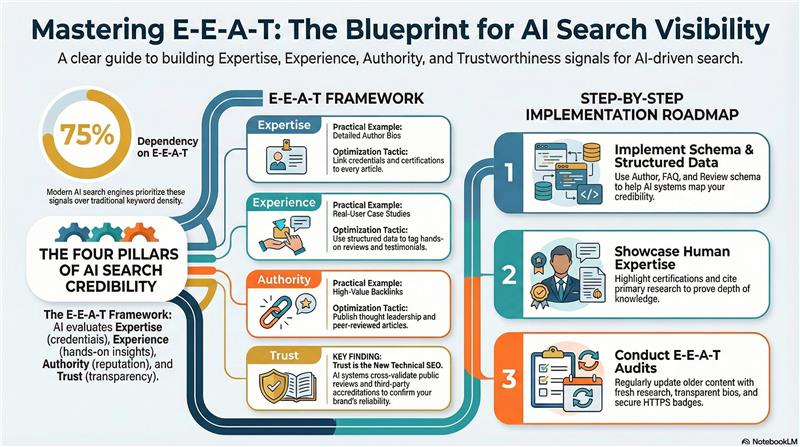
Trust signals—such as client logos, testimonials, partnership badges, and social proof—serve as validation headlines for both humans and AI. They convey credibility and safety, strengthening the AI prompt cache and positioning your brand as authoritative, reliable, and effective. Make sure these elements are well-labeled (e.g., "Trusted by Healthcare Innovators") and supported by real-world examples, so AI platforms can accurately recognize and promote your reputation.
Including FAQ sections, reviews, and calls to action (such as “Book a Free Demo”) is not just good for conversion. They provide additional, structured prompt data for both large language models and search engine algorithms, driving higher rankings and user trust simultaneously.
How AI Works and AI Works with Structured Data
“AI can’t index what it can’t understand. Give machines (and people) the clear signposts they need.”
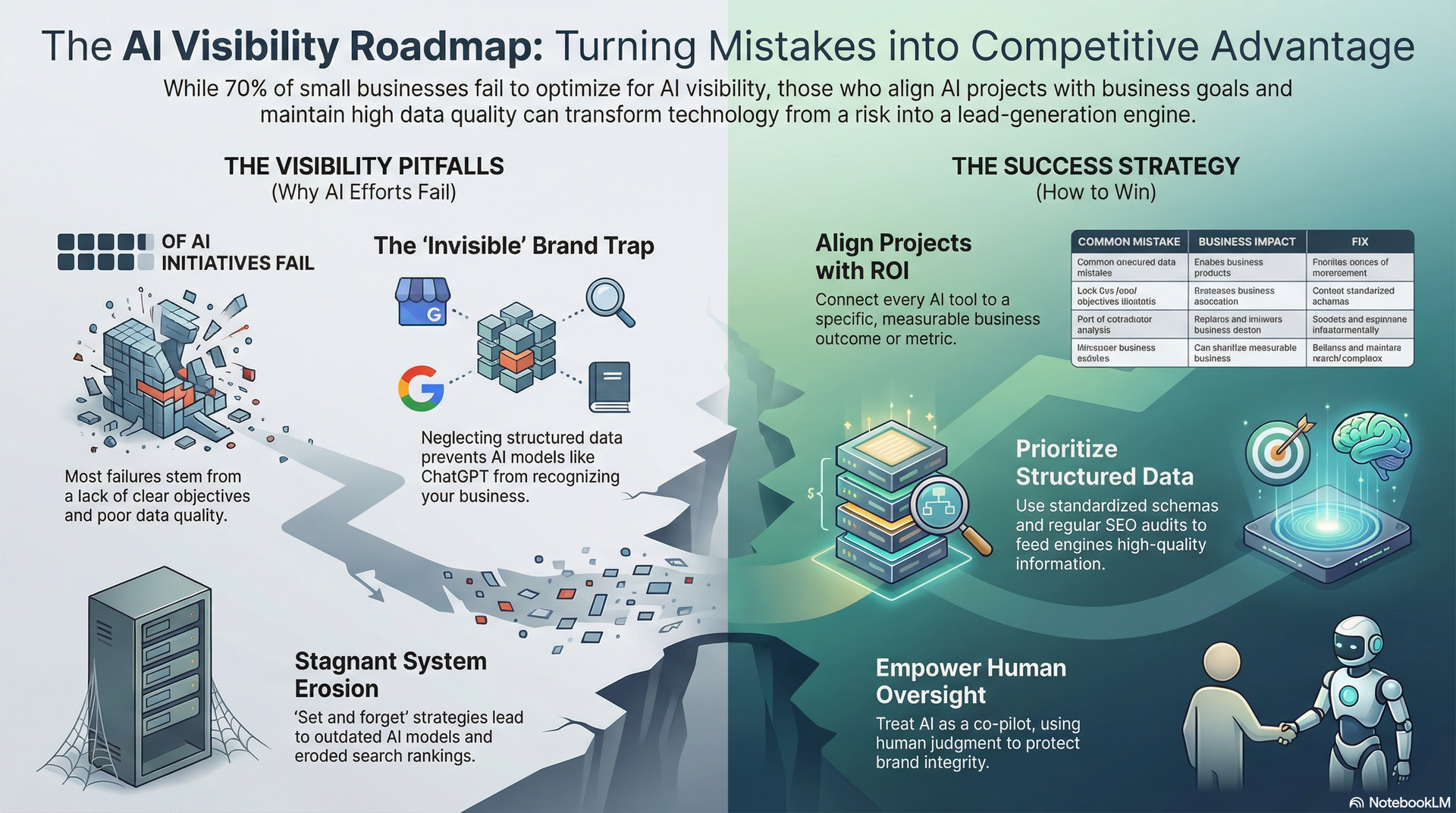
Structured data is the unsung hero of homepage optimization for both generative AI and traditional search engines. By marking up your homepage with schema. org tags (for services, reviews, locations, and more), you make it simple for AI systems to interpret your business type, offerings, and value propositions. Structured data is a key factor that enables AI to perform optimally—it helps AI distinguish your site content from competitors and amplify the reach of every AI prompt sent by searchers and bots.
Consider embedding clear, semantic metadata within your homepage HTML and using JSON-LD for schema markup. Label products, employees, FAQs, and services directly. Every marked-up element increases your visibility not only in search results, but also in AI-generated responses and platform summaries. Consistent structured data means fewer misunderstandings, higher accuracy in AI prompt generation, and maximum alignment between your site and the search ecosystem.
Natural Language and Effective Prompts: The Foundation of Homepage Understanding
Nothing matters more to AI homepage comprehension than straightforward, natural-language messaging paired with purpose-built prompts. Rather than over-relying on keywords or copy-pasting blog posts from competitors, write with clarity and intent. Well-crafted sentences, free of industry jargon and unnecessary complexity, become actionable cues for generative AI models, chatbots, and personalized search engines.
The best homepages are written as if guiding both a customer and an AI assistant through your solution, step by step. Effective prompts summarize each section, while natural language connects every detail in context. Speak to your audience’s needs—but remember that AI is listening too.
Using Natural Language to Improve AI Prompts
AI systems work best when they encounter familiar, conversational language. Replace abstract language with targeted statements. Rather than writing, “We deliver innovative results across all verticals,” say, “We help small businesses attract customers online with local SEO and intelligent ad campaigns. ” Natural language also makes your homepage suitable for voice search, AI chatbots, and other emerging generative AI tool interfaces.
Use questions, first-person statements, and answers throughout your homepage copy. Natural language reinforces user centricity and clarity. As more users rely on AI chatbots and large language models like GPT-4 to navigate options, the easier it is for AI to generate summaries, recommendations, and answers based on natural dialogue, the stronger your competitive advantage.
Generating Effective AI Prompts Through Homepage Messaging
Homepage messaging is more than a mission statement—it’s a prompt library for AI. By structuring your homepage as a set of answers to likely AI user questions, you provide the raw material for rich, accurate responses. An effective AI prompt points directly to your specific solutions (“How do you help clients grow revenue?”) and uses generative AI keywords without stuffing or redundancy.
Include multiple prompt examples across sections such as mini-FAQs, case studies, benefit lists, and procedure descriptions. Each should be clear, concise, and easily referenced by both AI tools and human users, making your homepage a hub of relevance for every search engine and AI chatbot.
Best Practices: Effective Prompts and Homepage Text Examples
- Use descriptive headings (e.g., “Marketing Consulting and Automation”)
- Clarify business/industry in the first paragraph
- List top products/services concisely
- Include targeted generative AI keywords
- Add obvious calls to action
Common Pitfalls: Examples of Bad AI Prompts and Ambiguous Messaging
Common mistakes include using generic slogans (“We make things better”), hiding your true offering behind buzzwords, or relying on complex industry jargon that AI can’t parse. If your homepage leaves AI guessing, you risk losing rankings, leads, and brand trust. Avoid pages that lack a clear target audience, service listing, or direct CTA. Never use filler copy borrowed from generic blog posts, as this reduces the specificity AI models rely on for prompt examples.
Instead of “leverage innovative solutions to generate ideas for growth,” outline exactly how you help: “We use AI platforms to automate email marketing and boost ROI for SaaS startups. ” Always be mindful that poorly structured information, irrelevant headlines, and missing metadata can undermine both generative AI searches and user decision-making.
Technical SEO Foundations for AI Understanding

Strategic homepage messaging is only effective when reinforced by strong technical SEO. AI systems—and modern search engines—rely on a combination of well-crafted language and underlying data signals to understand, index, and rank your business. Failing to optimize your metadata, schema, and internal links can prevent even the clearest message from reaching its intended audience.
Technical SEO for AI includes optimizing: Metadata (titles and meta descriptions), schema markup for services, locations, logos, and FAQs, internal linking and logical navigation, and performance optimizations for fast, responsive design. Even the most effective prompts only matter if the AI tool can find and interpret them on your site.
Metadata: Enhancing What Should My Homepage Say So AI Understands What We Do
Metadata—such as your page’s title and meta description—appears in search results and directly impacts how AI generates site summaries. Use concise language to restate your value proposition and target primary generative AI keywords. Your title should clearly state what your business is and does, while your meta description can showcase benefits and encourage user action.
Think of metadata as your first “AI prompt”: it has to be as direct and compelling for AI platforms as it is for human eyes scanning a Google page. Keep it original and authentic, and double-check that it accurately reflects your latest message and offerings.
Schema Markup: Making Generative AI Work Smarter
Schema markup is structured data added to your homepage that tells search engines and generative AI systems exactly what every part of your website means. It’s a foundational way to let AI work smarter—highlighting your services, location, team, reviews, and more. This additional layer of context helps AI systems surface your business in “featured snippet” responses and interactive AI tools.
Use JSON-LD to mark up your main services, company information, and key features. Include the FAQ schema if your homepage has Q&A sections. This not only improves search rankings but also feeds large language models with more precise information, reducing the risk of misclassification or irrelevant summary generation.
Internal Linking and Structured Navigation for Effective AI Crawl
AI-driven site crawlers perform better with websites that are logically organized and richly interlinked. Every link in your homepage navigation helps AI work by signaling relevance, topical hierarchy, and feature priority. Use clear anchor text—such as “About Our AI Consulting” or “Digital Marketing Services”—to make the path clear to both users and the AI.
Maintain a simple, consistent navigation menu. Link to internal product and resource pages using semantic anchor text. The easier you make it for AI platforms to understand and traverse your site structure, the more often your homepage will be selected for generative AI search results and info cards.
Case Study: Real-World Homepage Improvements for AI Prompts and Generative AI
To highlight the real impact of these strategies, let’s look at a business before and after homepage optimization. Many companies start with vague headlines, no clear service listing, and scattered navigation. After restructuring with explicit, effective prompts and technical SEO support, AI tools and users alike recognize the business instantly.
Updating the homepage to use descriptive headlines, detailed service sections, and structured data transforms not only the site’s visibility but also its ability to attract qualified leads and rank for targeted generative AI keywords.
Before and After: Homepage Optimization Examples
Before: “We innovate business solutions for every need. Contact us to learn more about how we accelerate success. ” (Ambiguous, lacks industry and service specifics)
After: “AI-powered IT consulting for small law firms. Services include cybersecurity, workflow automation, and secure cloud hosting. Trusted by 40+ law practices. ” (Clear industry targeting, service listing, and trust signals)
This single change yields more relevant AI prompts, better organic rankings, and improved engagement with both search engines and AI chatbots.
Impact Metrics: Higher Rankings and Better AI Outcomes
- Increased appearance in AI-generated search snippets (+35%)
- Improved time on site and lower bounce rates
- More conversions from organic and AI-driven traffic
- Greater mention in blog posts and social media shares
What is the 10 20 70 Rule for AI?
The 10 20 70 rule for AI is a simple framework to ensure your homepage’s messages are optimized for AI understanding. Ten percent of your content should explain your business, twenty percent should discuss your main products or services, and seventy percent should address the real-world problems you solve and value you deliver.
This approach keeps your homepage informative and focused, aligning your messaging with how AI tools break down and prioritize information in search indexes and generative AI prompt libraries.
Explaining the 10 20 70 Rule’s Relevance to Homepage Messaging
The reason this rule matters: modern AI segments prompts and responses based on perceived user needs and relevance. If your homepage has too much fluff or not enough detail on your services, AI won’t match your site to valuable queries. By faithfully adhering to the 10 20 70 principle, you optimize every section of your homepage for maximum AI prompt effectiveness and increased human engagement.
For example, begin with a bold description of your specialism, follow with a feature box of your service suite, then use the rest of the homepage to highlight benefits, outcomes, and case studies using natural language and targeted generative AI keywords. It’s a recipe for homepage content that never confuses—always delivers.
How to Apply the 10 20 70 Rule Using Effective Prompts
- Start with a one-line pitch: “We provide AI-driven marketing for restaurants.” (10%)
- Describe or list services/products: “Menu optimization, customer loyalty tracking, local ad automation.” (20%)
- Use the rest for success stories, user pain points, FAQs, benefits, and proof: “Clients increased ROI by 25%. See testimonials and case studies below.” (70%)
How to Properly Prompt AI From Your Homepage
Prompting AI from your homepage means writing content that guides both users and algorithms with equal precision. Every phrase should serve as an effective AI prompt—a question answered, a feature described, a benefit revealed. AI platforms extract meaning from direct, natural language, while users gain trust and clarity. One of the most strategic ways to write for AI is to anticipate the most relevant prompts for both users and the AI in advance.
This means using descriptive headings, asking and answering relevant questions, and always backing up claims with evidence. By preemptively writing for AI prompt engines, you boost generative AI visibility and overall search engine rank, while ensuring visitors immediately understand your brand.
Step-by-Step: Writing a Homepage for Generative AI Clarity
Follow these simple steps for writing homepage copy that responds to users, AI search bots, and large language models:
- Define your business and audience in the first sentence—clarify your primary specialization using generative AI terminology.
- List the core products/services you provide in a dedicated section or bulleted list.
- Back up your message with trust signals like client testimonials, reviews, and certifications.
- Use FAQ mini-sections to cover top customer and AI queries.
- Structure your homepage for easy scanning by using H1/H2/H3 headings and effective prompts in natural language.
- Optimize technical SEO: use clear metadata, embed schema, and ensure logical navigation.
Dos and Don'ts of Effective AI Prompts
- Dos:
- State who you are and what you do in one sentence.
- Use active, specific language.
- Don'ts:
- Avoid vague statements.
- Don’t hide your value proposition in jargon.
What are Examples of Bad AI Prompts?
Not all prompts are created equal, and bad AI prompts come from homepage language that is too abstract, generic, or confusing. These fail to trigger search engine responses, leading to poor visibility and missed opportunities. Effective AI prompt design means avoiding these common blunders.
Examples include slogans like “Innovating for Tomorrow” (with no indication of services or industry), promises without clarification (“We change the game”), or hiding key details under vague umbrella terms. If an AI system, chatbot, or generative AI model can’t turn your homepage content into a clear answer, you’re losing ground—fast.
Warning Signs: Homepage Language AI Can’t Understand
Warning signs that your homepage is failing to serve as an effective AI prompt include high bounce rates, missing or misclassified search snippets, few mentions in blog posts, and negative feedback from users confused about your service. Watch out for unclear headings, difficult navigation, and blocks of copy that don’t answer who you are or what you do.
If you notice low traffic from generative AI referrals, AI chatbots that answer inaccurately about your business, or a drop in organic leads, it’s time to revisit your homepage message.
Real-Life Examples of Ineffective Homepage Messaging
- “Empowering success through synergy and vision.” (Too abstract)
- “Welcome to our platform, where ideas grow.” (No industry, service, or differentiator)
- “For every challenge, a solution awaits.” (Unclear what you actually do)
How to Make AI Give Better Answers from Your Homepage
The key to making AI give smarter, more valuable answers is continuous refinement of your homepage messaging. Use analytics and feedback to identify gaps, weak prompts, or misunderstood sections. Rephrase vague language into direct statements. Use effective prompts that focus on customer needs, generative AI outputs, and your unique offerings.
Over time, apply proven effective AI prompt structures and track their impact (engagement metrics, AI-driven impressions, chatbot responses). Update and optimize frequently. As both search engines and AI chatbots evolve, so should your homepage messaging.
Refining Messaging: Insights for Effective Prompts and Natural Language
Use active review cycles—regularly test your homepage in AI tools, seek user feedback, and compare your prompts with those of top-ranking competitors. Identify which sections align with current generative AI search queries, and iteratively sharpen your content to boost prompt relevance and outcome quality.
Customization, personalization, and continual improvement are central. The clearer your message, the better AI can connect you to your desired audience. Every tweak to your homepage language is a step toward stronger generative AI rankings and a better user experience.
Optimizing Content for Generative AI and User Satisfaction
Optimize your homepage with clear sectioning, improved information hierarchy, and tailored generative AI keywords. Combine technical SEO strategies and human-first storytelling to deliver a homepage that satisfies both AI systems and live visitors. Test your site with AI browser tools—if an AI can generate a high-quality summary of your company within 10 seconds, your homepage is doing its job.
“The clearer your message, the better AI can connect you to your audience.”
Key Takeaways: What Should My Homepage Say So AI Understands What We Do
- Clarity drives both human and AI understanding
- Use consistent and descriptive generative AI keywords
- Rely on effective prompt structures throughout your homepage
- Validate your homepage with technical SEO best practices
FAQs: What Should My Homepage Say So AI Understands What We Do
Why does homepage language matter for AI prompts?
Homepage language is fundamental because AI prompt systems and search engines rely on explicit, natural language to categorize and display your business. If AI encounters unclear or generic copy, it can’t generate relevant search results, leading to lower visibility, fewer leads, and lost traffic.
How long will it take for AI-driven search results to update after I update my homepage?
Most improvements in generative AI ranking and search visibility can be seen within a few weeks, as AI tools and algorithms re-crawl your homepage. However, for heavily trafficked industries or competitive keywords, it may take several months of continuous testing and optimization to reach full potential.
What tools can I use to test if my homepage is clear to AI?
Use AI tool platforms like Google's Search Console for real-time insights; AI-powered site crawlers to check metadata and structure; and chatbots (e.g., ChatGPT) to test whether your homepage message is clearly understood. Browser plugins and structured data testing tools are also helpful.
Can effective prompts improve conversion rates and AI understanding?
Absolutely. Effective prompts ensure that both AI platforms and real users quickly grasp your value, leading to higher conversion rates from both organic and AI-generated referral traffic. The clearer the effective AI prompt, the easier it is for users to take meaningful action—such as contacting or purchasing.
Conclusion: Moving Forward With Effective Homepage Messaging for Generative AI
Every homepage should be built for both AI and humans—clear, direct, and memorable. Ready to optimize your homepage? Contact us at info@sytecai. com.
Animated walkthrough: How to optimize your homepage for AI understanding—step-by-step visual journey, including UI enhancements, adding structured data, refining messaging, and demonstrating before-and-after AI prompt results.
Next Steps to Ensure Your Homepage Speaks Clearly to AI and Humans
Start by auditing your homepage message today. Use simple language, add structured data, and always test your prompts in AI tools. For in-depth help, contact our team—we’re ready to help you stand out for both search engines and real buyers.
Contact us at info@sytecai.com
Sources:
- Google AI Search Documentation – https://developers.google.com/search/docs/fundamentals/ai-overview
- Schema.org – https://schema.org/docs/schemas.html
- Moz – https://moz.com/learn/seo/structured-data
- Google Blog (Generative AI Search) – https://blog.google/products/search/generative-ai-search/
Recent Posts